Carefully selected articles from Kriter, Sabah and Insight Turkey, each condensed without losing its central argument. Read the summary, then continue to the original article.
01
Sabah
Are Alarm Bells Ringing in the World of Artificial Intelligence?
Safety and ethics warnings from researchers leaving artificial intelligence companies raise questions about the rules governing increasingly powerful systems and who gets to decide them. The article does not treat critical resignations as proof of an imminent catastrophe and stresses that comprehensive data showing an industry-wide acceleration in departures are lacking. For agents capable of taking action, it argues that safety must be assessed not just through model performance but also through restricted permissions, human approval, error detection, reversibility and the ability to stop the system. The commercialization of privacy, the transfer of value from original content creators to platforms and dependence on a handful of critical infrastructure providers are examined through the lenses of digital feudalism and technological sovereignty. It advocates cautious optimism that preserves the benefits of the technology while strengthening independent testing, genuine accountability, safe channels for employee warnings and meaningful human oversight.
The Imperial Power of the Digital Age: Data Colonialism and Artificial Intelligence
Power in the artificial intelligence ecosystem is measured not merely by market share, but by influence over knowledge, ethics and politics. The article argues that colonial extraction, once directed at raw materials, now targets human cognition, language, culture and behavioral data. When local knowledge is stripped of context, it becomes a resource that global platforms can process and monetize. Claims of sovereign artificial intelligence remain incomplete while chips and cloud infrastructure depend on foreign suppliers. Genuine digital sovereignty therefore requires an integrated strategy spanning critical minerals, semiconductors, data, models, energy and infrastructure.
Artificial Intelligence Sovereignty, Domestic Infrastructure and the Supply Chain
Sovereignty in artificial intelligence is about far more than developing a domestic model or chatbot. Data centers, cooling systems, energy, subsea cables, chips and critical minerals are all parts of the same strategic equation. Nvidia’s influence in accelerators, TSMC’s manufacturing capacity and China’s strength in rare-earth processing create global chokepoints. Türkiye’s defense-sector localization experience, together with infrastructure such as ARF ACC, provides a valuable foundation, yet hardware dependence persists. The article proposes a model of modular autonomy encompassing domestic orchestration software, cybersecurity, strategic public procurement and technology diplomacy.
The Scientific Community’s Test with Artificial Intelligence
Generative artificial intelligence is forcing science to reconsider authorship, originality and research integrity. As tools take over research, analysis and writing, the researcher can shift from author to curator or editor. Divergent regulatory approaches in the European Union, the United States and China create new compliance challenges for international research partnerships. Paper mills, fabricated data and images, and unreliable detection tools make scholarly publishing more vulnerable. The article favors transparency, access to raw data and clear disclosure of research processes over blanket bans, while examples such as AlphaFold and GNoME demonstrate the technology’s scientific value.
5G is not merely faster connectivity on mobile phones; it creates a new infrastructure layer linking devices, sensors and vehicles with very low latency. It enables real-time decisions in smart factories, predictive maintenance, precision agriculture and logistics networks. End-to-end visibility along routes such as the Middle Corridor and the Development Road could strengthen Türkiye’s logistics role. Remote healthcare, immersive education and digital public services are among its broader social benefits. The article warns that without domestic infrastructure, strong cybersecurity and a role in setting standards, Türkiye may remain a consumer rather than a producer.
Vast investment in artificial intelligence infrastructure is fueling concerns about a bubble amid heavy borrowing, uncertain demand and limited profitability. The absence of robust business models at some startups strengthens comparisons with the dot-com era. The counterargument is that early stages of major technological shifts often eliminate many players while still producing durable winners. According to the article, 2025 delivered neither the promised revolution nor a wholesale collapse; its economic effects remained uneven and costs stayed high. The central challenge is not deploying artificial intelligence as quickly as possible, but integrating it sustainably into the right domains.
Dependence on Artificial Intelligence and Its Psychological Effects
Constantly offloading cognitive work to artificial intelligence tools may weaken memory, attention, deep reasoning and critical judgment. The risks of digital amnesia and skill atrophy are particularly pronounced for students. Dependence on generative artificial intelligence can produce patterns associated with behavioral addiction, including preoccupation, withdrawal and continued use despite harmful consequences. Variable rewards, gamification and systems designed to flatter users may intensify psychological risks for vulnerable people. The article calls for ethical design, clear educational boundaries and disciplined personal use.
From Adopter to Innovator: Türkiye’s Strategic AI Initiatives for National Security and Inclusive Growth
In an increasingly technopolar world, artificial intelligence capacity has become a decisive factor in national competitiveness, security and international influence. Drawing on policy documents and case studies, the article examines Türkiye’s transition from technology adopter to active innovator in critical sectors such as defense, healthcare and education. Investment in human capital, equitable access to opportunity and robust data governance emerge as essential conditions for narrowing the digital divide and advancing inclusive growth. The study also assesses the role of artificial intelligence-driven defense modernization in building strategic autonomy and resilience against emerging threats. It recommends stronger cross-sector partnerships and investment in critical infrastructure to balance economic development, social equity and national security.
26 Audio and Visual PublicationsSocial and traditional media
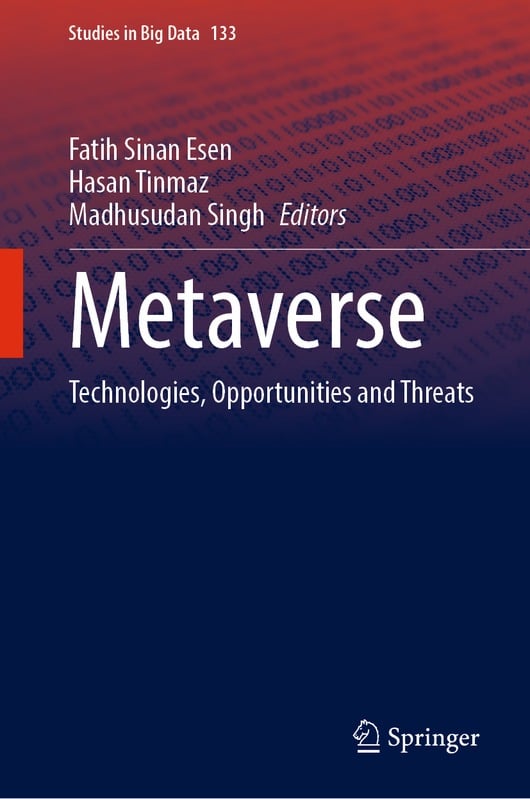
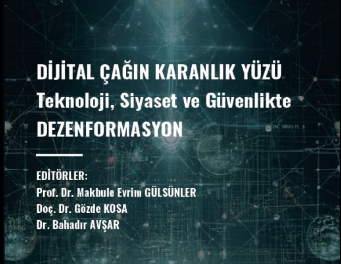
40+ published worksBooks, chapters and academic publications
01 Introduction
He serves as a specialist at one of Türkiye's leading institutions while pursuing his work as an author and computer scientist. He has experience coordinating innovative digital transformation projects across a range of fields.
He teaches university courses on artificial intelligence and its subfields. His work focuses on natural language processing, large language models, open data, the metaverse, the ethical, responsible and trustworthy use of technology, and disinformation.
He has authored numerous publications and edited several technical books. He shares his experience, research and ideas through television and radio programs, as well as in-person and online events.
02 Brief profile
A Multidisciplinary Perspective
A career that brings together computer engineering, management science, public-sector experience and a commitment to societal impact.
Books, book chapters and academic publications on artificial intelligence, the metaverse, digital leadership, social network analysis and disinformation.